
Reviewed · BLUE MOUNTAINS TOURS
Stargazing with an Astronomer in the Blue Mountains
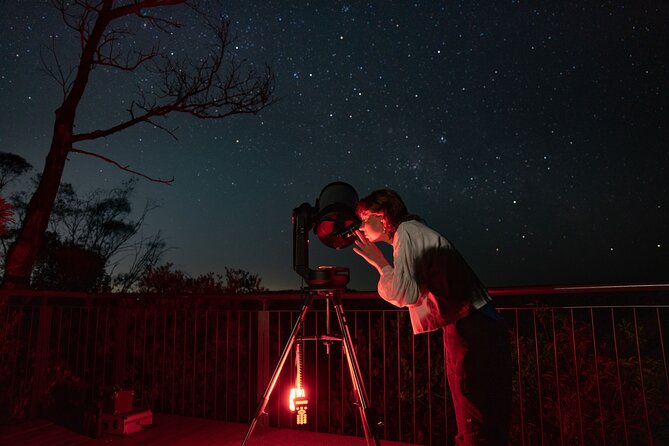
The Southern Hemisphere sky is the main event here. In a 90-minute session near Wentworth Falls, an astrophysicist helps you find constellations with the naked eye, then brings selected objects closer through a professional-grade telescope. Depending on the season and conditions, that could mean the Moon, a planet, a nebula, a star cluster, or something farther away.
I like two things in particular: you get both laser-guided constellation storytelling and hands-on telescope viewing, so the night is more than a list of stars. And the small-group limit of 20 leaves room for questions, while hot chocolate gives you a welcome reason to linger between views.
The catch is the weather. Clouds or wind can change the plan, and the viewing spot may shift from the lookout to a park. Read the bad-weather terms carefully before booking, since the stated options vary between the tour details and cancellation terms.
Key points
- A Southern Hemisphere sky lesson: Learn to identify constellations, including the Southern Cross when it is visible.
- Telescope and binocular viewing: The session uses a state-of-the-art telescope and astronomy binoculars.
- Targets vary by night: The Moon, planets, the Orion Nebula, star clusters, double or triple stars, galaxies, and the Milky Way may be visible.
- An astronomer leads the session: Your guide is an astrophysicist with more than ten years of experience, with time set aside for questions.
- A small group, not a private tour: The maximum is 20 people.
- Weather can alter the plan: You may be offered a transferable credit or an indoor planetarium session if conditions are poor.
Finding your bearings beneath the Blue Mountains sky
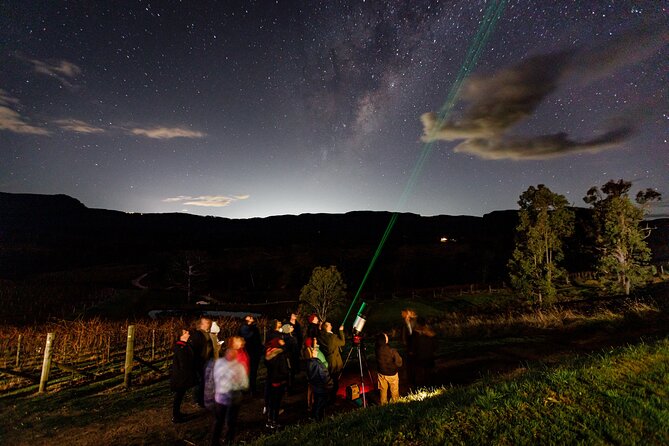
The tour meets at Wentworth Falls Lookout Track in the Greater Blue Mountains, a World Heritage-listed area. The activity ends back at the meeting point, so you do not need to plan for a separate drop-off location.
The setting matters because this is not a planetarium show with a fixed program. You are outside, looking at the sky as it appears that night. That makes the experience more immediate, but also more dependent on weather and visibility. Wind has been strong enough on some evenings to move the viewing from the lookout to a park, so treat the exact spot as subject to conditions.
This is a night-sky activity rather than a daytime sightseeing stop. Allow the full 90 minutes and arrive ready to spend that time outdoors. The available information does not specify a precise departure time, so check your confirmation for the session details rather than assuming the tour begins at a particular hour.
More Blue Mountains trips from Blue Mountains:
- All Inclusive Blue Mountain,Scenic World,Lunch,Koalas,ferry
★ 5.0 · 7,832 reviews - From Sydney: Blue Mountains Full-Day Trip
★ 4.5 · 4,471 reviews - Blue Mountains Small-Group Tour from Sydney with Scenic World,Sydney Zoo & Ferry
★ 5.0 · 3,709 reviews
Learning the constellations before the telescope comes out
The session starts with the sky above you, not with a screen. Your guide uses a laser to point out constellations and tell their stories, helping you make sense of patterns that can otherwise look like a scatter of unrelated lights.
That naked-eye introduction is useful even if you already know a few constellations. A telescope gives you a close view of selected objects, but it is the broader sky that helps you understand where those objects sit. The guide’s explanations and the question-and-answer time give you a chance to connect the two.
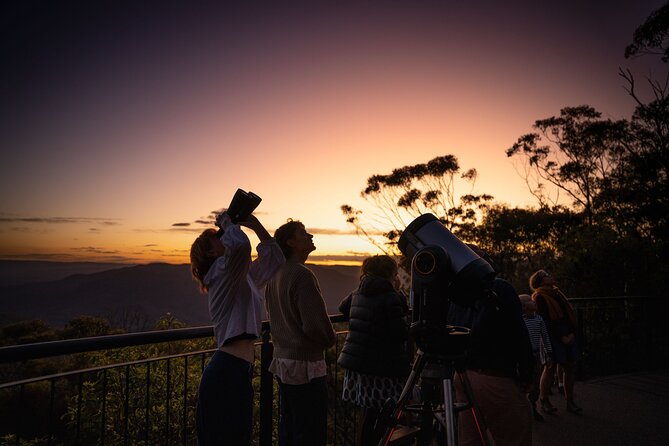
For visitors from the Northern Hemisphere, the southern sky can feel new. The Southern Cross, or Crux, is one example of a constellation you may be able to pick out, depending on the night. One account of the experience described watching the sky move from twilight into full darkness as Crux became clear. That transition can be part of the appeal, but it is not a guaranteed feature of every session.
Taking turns at the telescope
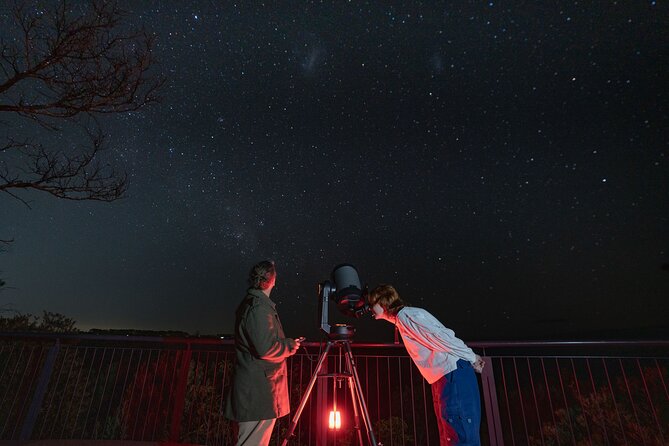
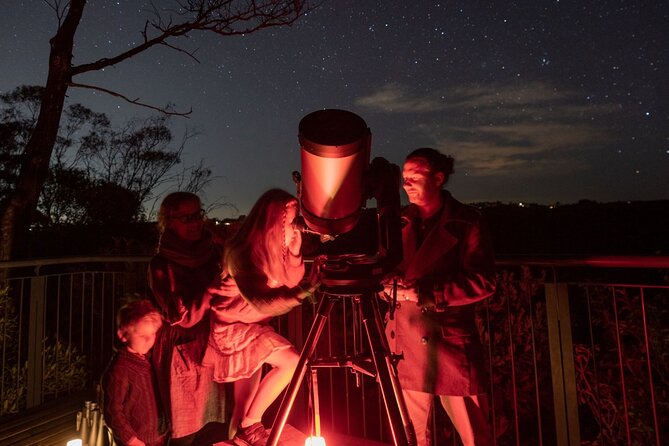
After the introductory sky talk, the guide brings out astronomy binoculars and a professional telescope. The equipment is a real advantage: instead of simply hearing that a planet or cluster is there, you get the chance to look at it yourself.
The list of possible targets is broad, but not promised. Depending on the night and time of year, you might see the Moon’s craters, Mars, Venus, Saturn’s rings, Jupiter’s moons, the Orion Nebula, star clusters, double or triple stars, galaxies, or the Milky Way. Visibility depends on what is above the horizon and on the conditions, so it is best to approach the list as a menu of possibilities rather than a checklist.
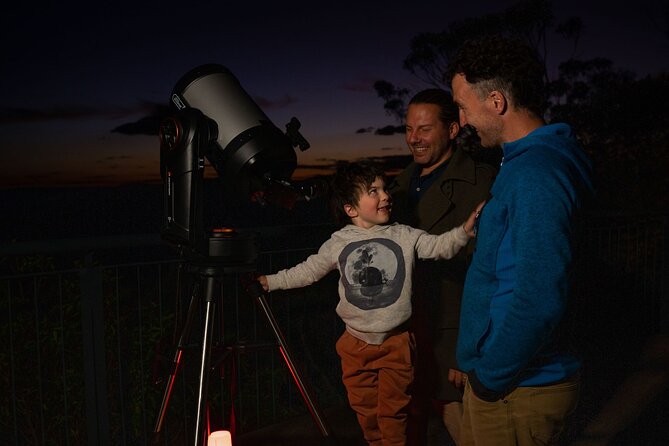
The telescope experience also has a social rhythm. In a group of up to 20, people take turns looking and asking questions. That is small enough for a shared session, but it is not a private viewing, and you may need to wait while others have their turn. The guide’s explanations help make the pauses useful rather than empty.
An astrophysicist with more than ten years of experience leads the session. Guides named in accounts of the tour include Nathan, Tom, and Alka. The details that matter most are the combination of subject knowledge and an approachable format: the tour is designed to be interactive, with questions welcome, rather than a technical lecture that assumes you already speak astronomy.
A warm drink and a little patience
Hot chocolate is included, and drinks may be warm or cold depending on the weather. That is a small practical touch, but a welcome one during an outdoor evening. Some visitors also refer to warm blankets, though blankets are not stated as a standard inclusion, so do not count on one being provided.
Bring your own layers. The experience takes place outside, and even an evening that starts comfortably can feel different once you are standing still to look through a telescope. The tour information does not specify what clothing or equipment is supplied beyond the telescope, binoculars, and drinks.
The pace is deliberately different from a quick photo stop. You listen, look, wait for your turn, and ask questions. If you are most interested in the astronomy, that slower rhythm gives the guide room to explain what you are seeing. If you are mainly coming for the scenery, remember that the focus is the night sky, not a broad sightseeing tour of the Blue Mountains.
Or spend the day another way:
- Blue Mountain: Small-Group Tour with Lunch & Scenic World
★ 4.8 · 3,009 reviews - Blue Mountains Day Trip from Sydney Including Scenic World
★ 4.5 · 2,420 reviews - From Sydney: Blue Mountains Tour with Waterfall Walk & Lunch
★ 4.8 · 2,400 reviews - Blue Mountains Adventure: Scenic World, Zoo & Koala Photo
★ 4.7 · 2,062 reviews
Weather is the main uncertainty
This experience needs suitable weather, and the tour’s bad-weather arrangements deserve attention before you pay. The detailed weather instructions say that, at 1 pm on the day, you will be given two options if conditions are poor: take a transferable credit valid for three years and reschedule, or attend an indoor planetarium astronomy tour instead. The indoor alternative lasts 90 minutes and requires at least eight participants to run.
The cancellation terms also state that if the experience is canceled because of poor weather, you will be offered a different date or a full refund. Those statements do not describe exactly the same remedy, so confirm which option applies to your booking before relying on a refund or credit.
If you have not received an email by 1 pm on the day, the tour information says the outdoor stargazing session is confirmed. That is a useful check, but it does not guarantee clear skies throughout the evening. Wind can also affect where the viewing happens, as the move from a lookout to a park shows.
The indoor planetarium is a meaningful backup, not simply a wait indoors. It uses a dome, a powerful projector, and a cinema-style presentation. Still, it is a different experience: if seeing real objects through a telescope is your priority, a rescheduled outdoor session may suit you better.
What $60.97 buys you
At $60.97 per person, this is a focused 90-minute activity, not an all-evening astronomy course. The price covers an astronomer-led session, constellation storytelling, telescope and binocular viewing, time for questions, and hot chocolate. For someone curious about the southern sky, that combination gives the fee more substance than a brief look through a telescope without explanation.
The value depends on your expectations. You are paying for access to specialized equipment and a guide who can explain what you are seeing, not for a guaranteed view of a particular planet or galaxy. If clouds block the sky, the telescope portion may be limited or replaced by the indoor alternative, which makes the weather policy especially important to your decision.
The tour is commonly booked about 24 days ahead. That is a sensible planning point if you have a fixed date in the Blue Mountains, though availability is subject to confirmation. Booking confirmation is stated to arrive within 48 hours, subject to availability.
Who will enjoy this night most
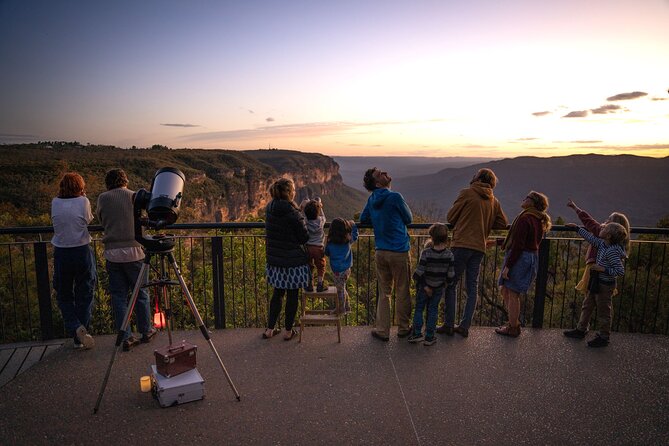
I would put this tour high on the list for anyone who wants to understand the Southern Hemisphere sky rather than simply take a night photo. It suits first-time stargazers, curious adults, families, and visitors from the Northern Hemisphere who may never have seen the Southern Cross. The language options are English and French.
It can also work well if you enjoy asking questions. The astronomer-led format and group cap make this more personal than a large, scripted presentation, though you will share the telescope and guide’s attention with other people. The experience is wheelchair and stroller accessible, and service animals are allowed. It is also near public transportation, and most people can participate.
It may not be the right choice if you need certainty about what you will see, dislike being outdoors at night, or want a tour with several stops and lots of movement. The sky decides the viewing list. Your best approach is to go for the learning and the chance to look through the equipment, with any particular planet or nebula as a bonus.
Should you book the Blue Mountains stargazing tour?
Book it if you are interested in astronomy, want an expert to make the southern sky easier to read, and can be flexible about weather and celestial targets. The strongest reasons to go are the mix of naked-eye constellation guidance, telescope viewing, and a guide-led question session in a group capped at 20.
Pause if a specific object is the whole reason for your booking, or if you are uncomfortable with the weather terms as stated. Before paying, confirm what happens if poor conditions cancel the outdoor session. If you can accept that uncertainty, this is a practical, accessible way to spend an evening learning what is above the Blue Mountains.
FAQ
How long is the stargazing tour?
The outdoor tour lasts approximately 90 minutes.
Where does the tour start and end?
It starts at Wentworth Falls Lookout Track in New South Wales and ends back at the meeting point.
What can I see through the telescope?
Depending on the night and time of year, possible sights include the Moon, planets, the Orion Nebula, star clusters, double or triple stars, galaxies, and the Milky Way. No particular object is guaranteed.
Does the tour provide a telescope?
Yes. The session includes a professional-grade, state-of-the-art telescope and astronomy binoculars.
What languages are available?
The experience is available in English and French.
Is the activity wheelchair and stroller accessible?
Yes. The tour information states that it is wheelchair and stroller accessible.
Are drinks included?
Complimentary hot chocolate is included. The information also says warm or cold drinks may be provided depending on the weather.
What happens if the weather is poor?
The detailed weather instructions offer a transferable credit valid for three years or an indoor 90-minute planetarium tour, which requires at least eight participants. The cancellation terms also state that a weather cancellation may result in a different date or a full refund, so confirm the applicable option before booking.
How many people can join the tour?
The maximum group size is 20.
How far ahead is the tour usually booked?
It is booked an average of 24 days in advance. Booking confirmation is stated to arrive within 48 hours, subject to availability.
Fresh reviews from Blue Mountains
- PJ Blue Mountains Supreme [Private Charter]★ 5.0 · 11 reviews
- Private Tour Blue Mountains Day Adventure Wildlife + River Cruise★ 5.0 · 9 reviews
- Inside the Greater Blue Mountains World Heritage – A Private Wildlife Safari Overnight★ 4.5 · 3 reviews
- Adventurous Blue Mountains hike up the iconic Three Sisters★ 5.0 · 13 reviews
- Private Blue Mountains Insider Tour from Sydney★ 4.5 · 7 reviews
- Blue Mountains Small Group Tour w/optional Scenic World & Lunch★ 4.0 · 19 reviews
- PRIVATE Blue Mountains Scenic World Australian Wildlife & Cruise★ 5.0 · 7 reviews
- Blue Mountains Day, Sunset Tour & Glow Worms Night Adventure★ 5.0 · 11 reviews
Blue Mountains Tours, compared.
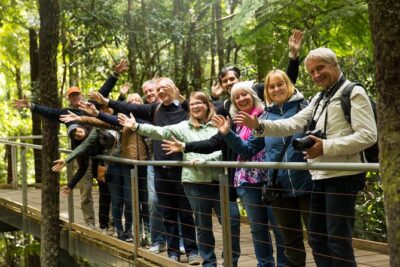
All Inclusive Blue Mountain,Scenic World,Lunch,Koalas,ferry
Read our review →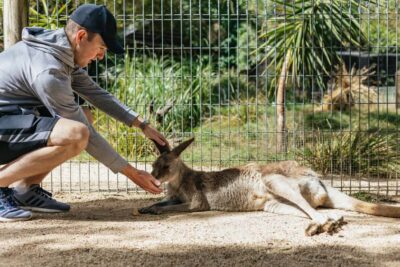
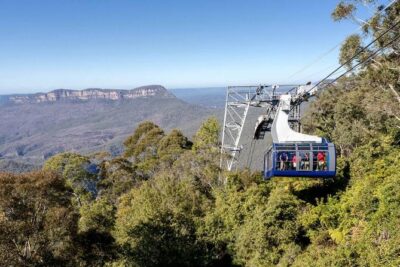
Blue Mountains Small-Group Tour from Sydney with Scenic World,Sydney Zoo & Ferry
Read our review →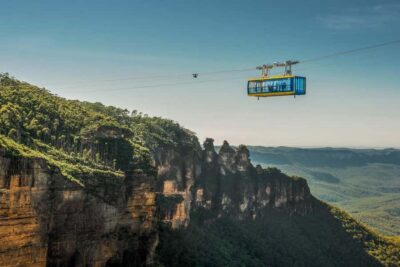
Blue Mountain: Small-Group Tour with Lunch & Scenic World
Read our review →
Blue Mountains Day Trip from Sydney Including Scenic World
Read our review →
Blue Mountains Tour with Waterfall Walk & Lunch
Read our review →
Blue Mountains Adventure: Scenic World, Zoo & Koala Photo
Read our review →
Blue Mountains Day Tour Including Parramatta River Cruise
Read our review →Browse the lists this tour appears in